
Class types · Mansarovar
Hatha Yoga Classes in Mansarovar, Jaipur
The classical, unhurried style — one posture at a time, held with steady breath, corrected by hand. This is the batch almost everyone at Karma Yoga starts in.
What is hatha yoga?
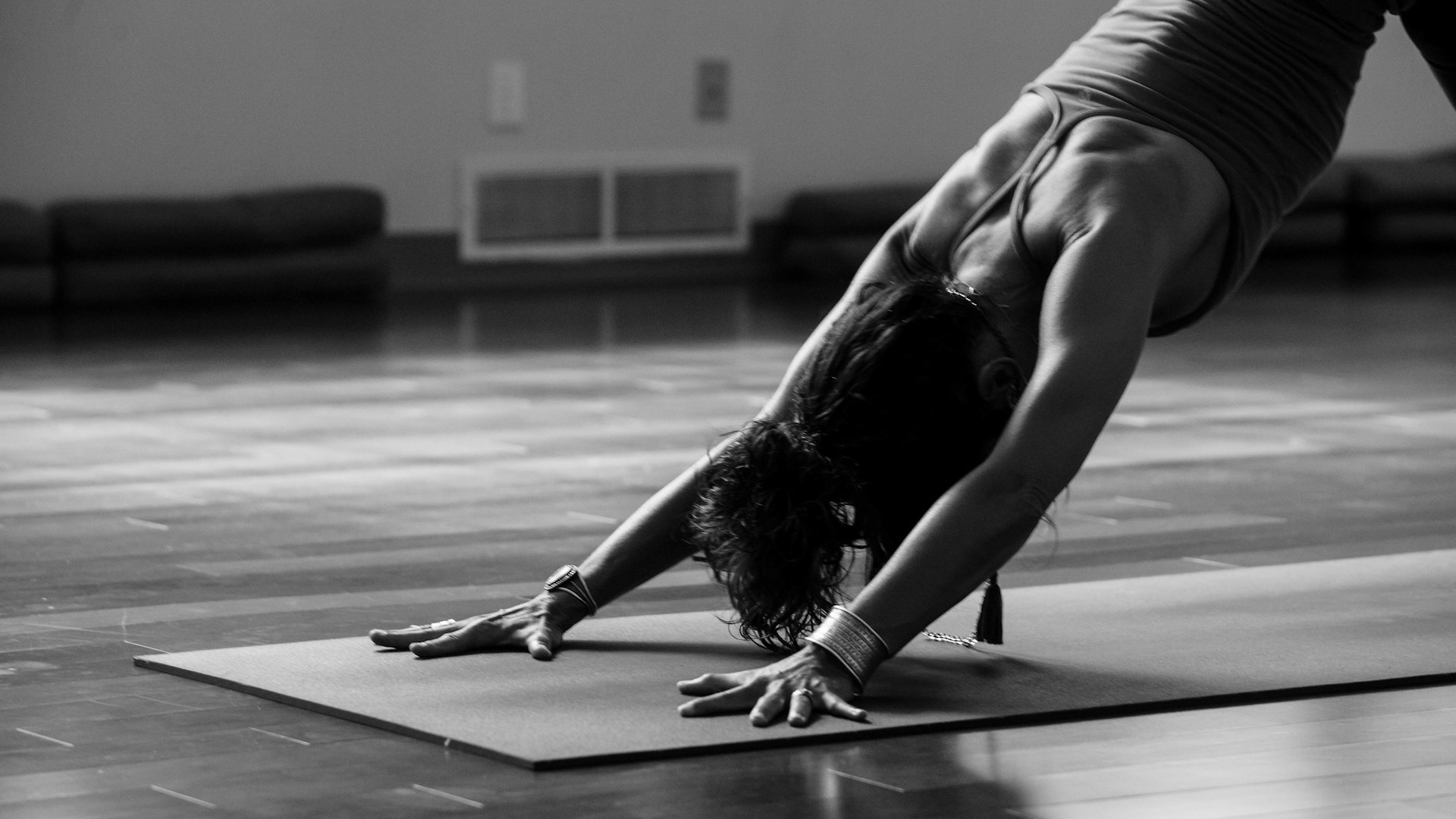
Hatha yoga is the classical form most people picture when they think of yoga: you enter a posture, hold it for a set number of breaths, come out of it, and rest before the next one. There is no music-driven flow and no rush. That pause between postures is the whole point — it is where you notice which side of your body is tighter, where your breath goes short, and where your knee is quietly taking the load your hip should.
At Karma Yoga the hatha batch runs for sixty minutes, six days a week, at the studio in Agarwal Farm, Mansarovar. Ritika Khandelwal teaches it herself, in groups of eight to twelve, which is small enough that she can walk the room and correct your alignment by hand instead of shouting instructions from the front.
Who is this hatha yoga class for?
It is for people who want to start properly rather than quickly. If you have never practised before, if you sit at a desk all day, or if you last touched a mat years ago, this is the right room.
This class suits you if
- You are a complete beginner and want to learn technique before intensity
- You sit at a screen for most of the day and feel it in your neck and lower back
- You are returning after a gap, a pregnancy, or an injury your doctor has cleared
- You are over 45 and want steady, low-impact movement six days a week
- You want a calmer head as much as a more flexible body
Choose a different batch if
- You want to sweat hard and burn calories — take power yoga instead
- You would rather practise in a room with no men in it — the ladies-only batch covers the same syllabus
- You are pregnant — join prenatal yoga, which is built around the trimesters
- You cannot get down to the floor comfortably — ask about chair-supported senior yoga
What does a typical hatha session look like?
Sixty minutes, always in the same shape, so that by your second week you know what is coming and can stop watching the clock. Nothing in it is a surprise and nothing is a test.
| Minutes | What happens |
|---|---|
| 0–5 | Sitting still, eyes closed, a few rounds of simple breathing. Ritika asks the room what hurts today. |
| 5–15 | Sukshma vyayama — joint loosening for neck, shoulders, wrists, hips, knees and ankles. |
| 15–25 | Surya Namaskar at a slow count, three to six rounds depending on the batch's level. |
| 25–45 | The main postures — standing, seated, prone and supine — held for five to eight breaths each with rest in between. |
| 45–53 | Pranayama: anulom vilom, and bhramari on the evenings when the room is wound up. |
| 53–60 | Shavasana. Lying still, doing nothing. Most students say this is the part they miss when they skip class. |
Which asanas will I actually practise?
The syllabus rotates so that no muscle group is neglected for long. These are the postures that come up most weeks, with the reason each one is in the sequence.
| Asana | English name | Why it is in the sequence |
|---|---|---|
| Tadasana | Mountain pose | Teaches you where neutral standing actually is — most people's default is not it |
| Trikonasana | Triangle pose | Opens the side body and hips; exposes the tighter side immediately |
| Vrikshasana | Tree pose | Balance and ankle stability, which matter more with every passing decade |
| Bhujangasana | Cobra pose | Gentle back extension after hours of forward-hunched sitting |
| Setu Bandhasana | Bridge pose | Glutes and lower back, without loading the knees |
| Paschimottanasana | Seated forward bend | Hamstrings and lower back; the honest measure of your progress |
| Balasana | Child's pose | The rest posture you are allowed to take at any moment, without asking |
| Shavasana | Corpse pose | Lets the nervous system absorb the hour; never skipped |
What students notice
Benefits of a regular hatha practice
Reported by students over months of steady attendance. Yoga supports general wellbeing and is complementary to medical care — it does not replace your doctor's advice.
Less morning stiffness
Daily joint-loosening work is why students who come six days a week stop dreading the first ten minutes of the day.
Better posture at a desk
Backbends and shoulder work counteract the forward hunch that a laptop builds into you over years.
Steadier breathing
Holding postures for eight breaths teaches you to keep breathing under effort — a habit that carries off the mat.
Improved balance
Tree pose and single-leg work are unglamorous and, for students past fifty, among the most useful things in the class.
Easier sleep
The evening batch ends with pranayama and shavasana specifically because most students come to it straight from work.
A routine you keep
Hatha is sustainable. It is gentle enough that you come back tomorrow, which is the only variable that really matters.
Nobody in that room is looking at you. Everybody there was a beginner within the last two years, half of them cannot touch their toes, and the person next to you is fully occupied with their own hamstrings. You are allowed to sit down mid-class, drop into child's pose, or skip a posture entirely without explaining yourself.
Arrive five minutes early, tell Ritika it is your first class, and mention anything that hurts. That is the entire preparation.
Timings & fees
When the hatha batch runs
At the studio: 112/187, Thadi Market, Agarwal Farm, Jhalana Chhod, Mansarovar, Jaipur.
| Batch | Days | Time | Suits |
|---|---|---|---|
| Morning hatha | Mon–Sat | 6:00 – 7:00 AM | Anyone leaving for work by 9:00 |
| Evening hatha | Mon–Sat | 5:00 – 6:00 PM | Students, and anyone coming back from Gopalpura or Pratap Nagar |
Fees for every batch are published openly — you do not have to call to find out what a month costs.
Questions
Hatha yoga FAQs
Is hatha yoga suitable for complete beginners?
Yes. Hatha is the slowest style we teach and the one designed for people starting from zero. Postures are demonstrated first, held for only a few breaths at the start, and every one of them has an easier version you are shown on day one.
How is hatha yoga different from power yoga?
Hatha holds one posture at a time with a pause between each, so you learn alignment. Power yoga links postures into continuous movement with no pause, so the heart rate stays high. Hatha builds the technique that makes power yoga safe.
What are the hatha yoga class timings in Mansarovar?
The hatha batch runs Monday to Saturday at 6:00 to 7:00 AM and again at 5:00 to 6:00 PM at the Agarwal Farm studio in Mansarovar. Both timings cover the same syllabus, so you can move between them when work demands it. The full weekly schedule lists every batch.
What should I bring to my first hatha yoga class?
Loose clothing, a water bottle, and an empty stomach — leave two to three hours after a meal. Mats, blocks, straps and bolsters are provided, so there is nothing to buy before your trial class.
I have back or knee discomfort. Can I still join the hatha batch?
Usually yes, provided your doctor is happy for you to do gentle physical activity. Tell Ritika before class where the discomfort is and she will give you a modified version of the postures that would aggravate it. Yoga is complementary to medical care, not a replacement for it. See yoga for back pain and yoga for knee pain for more detail.
How soon will I notice a difference?
Most students report sleeping better and feeling less stiff in the mornings within three to four weeks of practising four or five times a week. Visible changes in flexibility and posture usually take two to three months of steady attendance.
Your first class is free
Come to a hatha batch this week
6:00 AM or 5:00 PM, Monday to Saturday, opposite Thadi Market in Agarwal Farm. Borrow a mat and see how it feels.